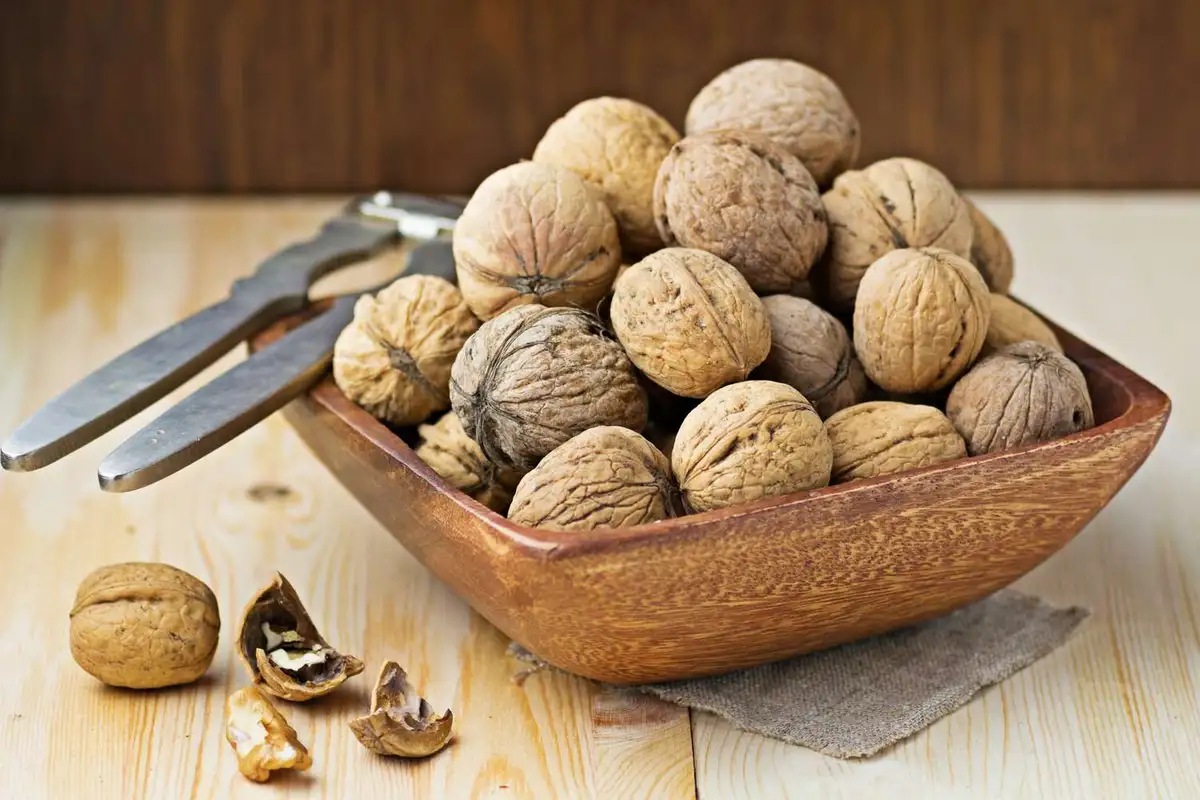
Have you ever looked at a walnut and noticed it looks exactly like a human brain?
That is not a coincidence. Nature has a way of telling us which foods are good for which organs — and walnuts are the ultimate brain food, shaped like the very organ they nourish.
Walnuts — known as Akhrot (अखरोट) in Hindi — are one of the oldest and most celebrated nuts in the world. Called the “royal nut” in ancient Persia, walnuts have been eaten for their health benefits for over 7000 years. And modern science is now confirming every single one of those ancient claims.
In this complete guide we will walk you through all the important walnuts benefits — from brain power and heart health to weight loss, skin glow and PCOS management. We will also tell you exactly how many walnuts to eat daily, the best time to eat them and whether soaked walnuts are better than raw.
Let’s get started.
Table of Contents
What Are Walnuts? (Akhrot)
Walnuts come from the walnut tree (Juglans regia) — originally from Persia and Central Asia. They were brought to India centuries ago and today India imports most of its walnuts from the valleys of Jammu & Kashmir — particularly from the Srinagar and Kargil regions.

In India walnuts are called by different names:
| Language | Name |
|---|---|
| Hindi | Akhrot (अखरोट) |
| Marathi | Akhrod |
| Tamil | Akrottu |
| Telugu | Akhrotu |
| Kannada | Akrodu |
| Bengali | Aakhroth |
| Gujarati | Akhrot |
Kashmiri Walnuts — India’s Finest: Kashmiri walnuts — locally called Doon — are grown at elevations of 5,000-7,500 feet in the Himalayan valleys. The extreme temperature swings at these heights force the trees to develop higher concentrations of antioxidants and omega-3 fatty acids — making Kashmiri walnuts nutritionally superior to walnuts grown anywhere else in the world.
Walnuts Nutrition Facts
Per 28 grams (approximately 7 walnut halves) of raw walnuts:
| Nutrient | Amount | % Daily Value |
|---|---|---|
| Calories | 185 | — |
| Protein | 4.3g | 9% |
| Fat (healthy) | 18.5g | 24% |
| Omega-3 (ALA) | 2.5g | 156% |
| Fibre | 1.9g | 7% |
| Magnesium | 44mg | 11% |
| Phosphorus | 98mg | 8% |
| Copper | 0.4mg | 45% |
| Manganese | 0.97mg | 42% |
| Vitamin B6 | 0.15mg | 9% |
| Iron | 0.8mg | 4% |
Source: United States Department of Agriculture (USDA) — Nutritional Database
The standout nutrient is ALA omega-3 fatty acids — at 156% of daily value per serving. Walnuts are the ONLY tree nut that contains significant amounts of plant-based omega-3 — making them uniquely powerful for brain and heart health.
Top 13 Walnuts Benefits for Health
1. Walnuts Benefits for Brain Health
This is the most celebrated of all walnuts benefits — and it is backed by extraordinary scientific evidence.
Walnuts are rich in ALA omega-3 fatty acids, polyphenols, vitamin E and folate — a combination that directly nourishes brain cells, reduces neuroinflammation and protects against cognitive decline. A 2023 multi-school study found that regular walnut consumption significantly improved memory, processing speed and mental flexibility in participants.
The unique antioxidants in walnuts — called ellagitannins — are not found in any other nut. These compounds specifically protect brain cells from the oxidative stress that causes age-related memory loss and neurological disorders.
How walnuts benefit the brain:
- ALA omega-3 is a direct precursor to brain-essential DHA
- Polyphenols protect neurons from oxidative damage
- Vitamin E reduces risk of cognitive decline with age
- Folate supports brain cell repair and generation
- Melatonin in walnuts improves sleep — essential for memory consolidation
- Particularly beneficial for students — improves focus and learning
For students: Including walnuts daily can improve grasping power, reduce exam stress and support faster cognitive processing. This makes them one of the best snacks for children and students in India.
👉 Shop premium quality walnuts at Manvik Foods
2. Walnuts Benefits for Heart Health

Walnuts benefits for the heart are among the most extensively researched in nutritional science.
Walnuts are uniquely powerful for heart health because they address multiple risk factors simultaneously. Their omega-3 fatty acids reduce triglycerides and arterial inflammation. Their polyphenols prevent cholesterol oxidation. Their arginine (an amino acid) relaxes blood vessels and improves circulation.
Multiple large-scale studies have confirmed that people who eat walnuts regularly have significantly lower rates of heart disease, heart attacks and strokes.
How walnuts benefit heart health:
- ALA omega-3 reduces triglycerides and arterial inflammation
- Lower bad LDL cholesterol naturally
- Increase good HDL cholesterol levels
- Arginine relaxes blood vessels — reducing blood pressure
- Polyphenols prevent cholesterol oxidation in arteries
- Reduce risk of dangerous blood clots
3. Walnuts Benefits for Weight Loss
One of the most surprising walnuts benefits — because most people assume these calorie-dense nuts will cause weight gain.
Research consistently shows the opposite. People who eat walnuts regularly actually weigh less than those who avoid them. The protein, fat and fibre combination in walnuts activates the brain’s satiety centres — literally signalling fullness faster than most snacks. They also specifically target stubborn belly fat through their anti-inflammatory omega-3 action.
How walnuts benefit weight loss:
- Activate brain’s satiety signals — you feel full faster
- High protein reduces hunger hormone ghrelin
- Omega-3 specifically targets visceral belly fat storage
- Slow digestion keeps you satisfied for 3-4 hours
- Replace unhealthy snacks without missing satisfaction
- Boost metabolism through protein thermogenesis
Daily limit for weight loss: 4-5 walnut halves (about 28g) as a mid-morning snack
4. Walnuts Benefits for Anti-Inflammation
Walnuts benefits for reducing chronic inflammation make them one of the most powerful anti-inflammatory foods available.
Chronic inflammation is the hidden cause behind almost every major disease — heart disease, diabetes, cancer, arthritis and even depression. Walnuts contain a unique combination of omega-3 fatty acids and polyphenols that attack inflammation at multiple levels simultaneously.
The ellagitannins in walnuts are converted by gut bacteria into powerful anti-inflammatory compounds called urolithins — which are unique to walnuts and have extraordinary health-protective effects.
How walnuts benefit inflammation:
- ALA omega-3 directly reduces inflammatory markers
- Ellagitannins convert to urolithins — powerful anti-inflammatory compounds
- Polyphenols reduce C-reactive protein (CRP) — a key inflammation marker
- Reduce joint pain and stiffness from arthritis
- Lower neuroinflammation linked to depression and anxiety
5. Walnuts Benefits for Women and PCOS
Walnuts benefits are particularly significant for women — especially those dealing with PCOS, hormonal imbalances and menopause.
For PCOS: Research shows walnuts improve insulin sensitivity and reduce elevated androgen levels — two of the core issues in PCOS. Their omega-3 content reduces the chronic inflammation that worsens PCOS symptoms.
For Hormonal Balance: The healthy fats in walnuts provide the building blocks for hormone production. Omega-3 specifically helps regulate oestrogen levels.
For Menopause: Walnuts’ anti-inflammatory properties reduce hot flashes, improve mood and protect against the rapid bone loss that occurs after menopause.
For Fertility: Walnuts improve blood flow to the reproductive organs and reduce oxidative stress — supporting healthy egg quality.
6. Walnuts Benefits for Gut Health
One of the most exciting recent discoveries about walnuts benefits is their extraordinary impact on gut microbiome health.
Research published in 2026 found that eating walnuts daily significantly increases the diversity and abundance of beneficial gut bacteria — including Lactobacillus and Bifidobacterium species. A healthy gut microbiome is directly linked to better immunity, improved mood, easier weight management and reduced risk of chronic diseases.
How walnuts benefit gut health:
- Act as powerful prebiotic for beneficial gut bacteria
- Ellagitannins feed specific health-promoting bacterial strains
- High fibre promotes healthy bowel movements
- Anti-inflammatory compounds soothe digestive tract
- Reduce risk of colorectal cancer
7. Walnuts Benefits for Skin
Walnuts benefits for skin make them one of the best beauty foods available — working from the inside out.
The vitamin E in walnuts is a powerful antioxidant that protects skin cells from UV damage and free radical oxidation. The omega-3 fatty acids keep skin deeply hydrated and supple. The copper in walnuts stimulates melanin and collagen production for firm, even-toned, youthful skin.
How walnuts benefit skin:
- Vitamin E protects skin from UV and free radical damage
- Omega-3 keeps skin hydrated and reduces dryness
- Copper stimulates collagen for firm youthful skin
- Anti-inflammatory properties reduce acne and skin redness
- Polyphenols slow visible signs of skin ageing
8. Walnuts Benefits for Sleep
This is one of the lesser known but remarkable walnuts benefits — and it is particularly relevant for the millions of Indians struggling with poor sleep.
Walnuts are one of the very few food sources of melatonin — the hormone that regulates your sleep-wake cycle. They also contain tryptophan and omega-3 fatty acids that support serotonin production — which converts to melatonin at night.
How walnuts benefit sleep:
- Direct source of melatonin — the sleep hormone
- Tryptophan converts to serotonin then melatonin
- Omega-3 reduces anxiety and stress that disrupt sleep
- Magnesium calms the nervous system
- Regular consumption improves sleep quality over time
Best way to use: Eat 4-5 walnut halves as an after-dinner snack — not too late at night though.
9. Walnuts Benefits for Diabetes Management
India has one of the highest diabetes rates in the world — making these walnuts benefits for blood sugar control extremely relevant.
Despite being high in fat, walnuts have a very low glycemic index and do not spike blood sugar. Their omega-3 fatty acids and polyphenols improve insulin sensitivity over time — addressing the root cause of type 2 diabetes.
How walnuts benefit diabetes:
- Very low glycemic index — minimal blood sugar impact
- Omega-3 improves insulin sensitivity
- Polyphenols protect pancreatic beta cells
- Healthy fats slow glucose absorption after meals
- Reduce risk of diabetic cardiovascular complications
10. Walnuts Benefits for Bone Health
Walnuts benefits for bone strength are often overlooked — but they are significant, particularly for women at risk of osteoporosis.
Walnuts contain a powerful combination of calcium, magnesium, manganese and copper — all essential minerals for building and maintaining strong bones. Their anti-inflammatory omega-3 also directly reduces the inflammatory processes that break down bone tissue over time.
How walnuts benefit bones:
- Calcium and phosphorus for bone mineralisation
- Magnesium works with calcium for bone density
- Manganese activates bone-building enzymes
- Copper supports collagen in bone structure
- Omega-3 reduces inflammatory bone breakdown
11. Walnuts Benefits for Cancer Prevention
This is one of the most powerful and surprising walnuts benefits — and it is backed by multiple scientific studies.
Walnuts are rich in omega-3 fatty acids, polyphenols and phytosterols — compounds that have been shown to reduce the risk of several cancers, particularly breast cancer, prostate cancer and colorectal cancer. The urolithins produced from walnut polyphenols have specifically shown anti-cancer properties in research.
Key cancer-protective benefits:
- Omega-3 and antioxidants reduce tumour growth risk
- Urolithins have direct anti-proliferative effects on cancer cells
- Phytosterols reduce risk of hormone-sensitive cancers
- Anti-inflammatory compounds reduce cancer-promoting chronic inflammation
- Reduce oxidative DNA damage that triggers cancer development
12. Walnuts Benefits for Hair
Walnuts benefits for hair are valued by both men and women dealing with hair loss, thinning and premature greying.
The biotin (Vitamin B7) in walnuts strengthens hair shafts and reduces breakage. Omega-3 fatty acids nourish hair follicles from within. Copper helps maintain natural hair pigmentation — reducing premature greying. And vitamin E improves scalp blood circulation for better hair growth.
How walnuts benefit hair:
- Biotin strengthens hair shaft — reduces breakage
- Omega-3 nourishes hair follicles from within
- Copper maintains natural hair colour
- Vitamin E improves scalp blood circulation
- Zinc regulates hormones that affect hair growth
13. Walnuts Benefits for Mental Health
Walnuts benefits for mental health are becoming increasingly important given India’s rising rates of anxiety, depression and stress.
The omega-3 fatty acids in walnuts directly reduce neuroinflammation — a key driver of depression and anxiety. Polyphenols support the production of serotonin and dopamine — your brain’s natural mood-stabilising chemicals. Multiple studies show that people who eat walnuts regularly report lower rates of depression and better emotional wellbeing.
How walnuts benefit mental health:
- Omega-3 reduces neuroinflammation linked to depression
- Support serotonin and dopamine production
- Magnesium reduces anxiety and promotes calmness
- Melatonin improves sleep quality — poor sleep worsens mental health
- Polyphenols reduce cortisol — the stress hormone
Soaked Walnuts vs Raw Walnuts — Which is Better?
| Feature | Soaked Walnuts | Raw Walnuts |
|---|---|---|
| Digestion | ✅ Much easier | ❌ Harder to digest |
| Nutrient absorption | ✅ Higher | ❌ Tannins block some nutrients |
| Phytic acid | ✅ Reduced | ❌ Higher levels |
| Taste | ✅ Milder, less bitter | ❌ Slightly bitter |
| Preparation | Soak overnight | Ready to eat |
| Best for | Elderly, children, digestion issues | Quick snacking |
Verdict: Soaked walnuts are significantly better — especially if you find raw walnuts bitter or hard to digest. Soak 4-5 walnut halves in water overnight and eat them peeled in the morning.
How to Eat Walnuts in Indian Cooking
Akhrot Halwa — Ground walnuts cooked with ghee, milk and sugar. A nutritious festive dessert.
Walnut Chutney — Ground walnuts with garlic, lemon and spices. A Kashmiri classic that is both delicious and nutritious.
Add to Kheer — Sprinkle chopped walnuts over rice kheer or vermicelli kheer for crunch and nutrition.
Dry Fruit Ladoo — Mix walnuts with dates, almonds and cashews for a healthy festive sweet.
Walnut Milk — Blend soaked walnuts with water for a rich plant-based milk alternative.
Oatmeal Topping — Sprinkle chopped walnuts on your morning oatmeal — the simplest way to eat them daily.
How Many Walnuts to Eat Per Day?
| Goal | Daily Amount | Best Time |
|---|---|---|
| General health | 4-5 halves (28g) | Morning or mid-morning |
| Brain health | 5-7 halves | Morning on empty stomach |
| Heart health | 4-5 halves | Any time |
| Weight loss | 4-5 halves | Mid-morning snack |
| Better sleep | 4-5 halves | After dinner (early evening) |
| Students | 5-7 halves | Morning before study |
The golden rule: 28-30 grams (4-7 walnut halves) per day is ideal. Never exceed 50 grams daily — walnuts are calorie dense and more is not always better.
Walnuts Side Effects — What to Know
While walnuts benefits are extraordinary — be aware of these precautions:
1. High in calories — portion control needed 28g of walnuts contains 185 calories. Eating too many can lead to weight gain. Stick to 4-7 halves per day.
2. Tree nut allergy Walnut allergy is one of the most common tree nut allergies. Symptoms include itching, swelling and difficulty breathing. Stop immediately if you experience any reaction.
3. May cause digestive discomfort in large amounts Eating too many walnuts at once can cause bloating, gas and loose stools due to high fibre and fat content. Start with 2-3 halves and gradually increase.
4. High in oxalates — caution for kidney stones People prone to kidney stones should limit walnut consumption as they are moderately high in oxalates.
5. Store carefully — go rancid quickly Walnuts contain high amounts of polyunsaturated fat that oxidises easily. Always store in an airtight container in the refrigerator. Never eat walnuts that smell rancid or bitter.
Frequently Asked Questions
What are walnuts called in Hindi?
Walnuts are called Akhrot (अखरोट) in Hindi. In Marathi they are called Akhrod, in Tamil Akrottu and in Bengali Aakhroth. The finest quality walnuts in India come from the valleys of Jammu & Kashmir — particularly Kashmiri walnuts known locally as Doon.
How many walnuts should I eat per day?
4-5 walnut halves (approximately 28 grams) per day is the ideal daily amount for most adults. This provides significant brain and heart benefits without excess calories. Never exceed 50 grams (about 14-15 halves) per day.
Are walnuts good for brain health?
Yes — walnuts are one of the best foods for brain health available. They are the only tree nut containing significant amounts of ALA omega-3 fatty acids — directly nourishing brain cells. Their unique polyphenols (ellagitannins) and vitamin E reduce neuroinflammation and protect against cognitive decline. Students, elderly people and anyone wanting to improve memory will benefit greatly.
What is the best time to eat walnuts?
Morning is the best time for brain health and weight management benefits. Mid-morning (10-11 AM) is ideal for sustained energy and hunger control. Early evening after dinner is best for sleep benefits due to walnut’s melatonin content. Avoid eating walnuts late at night.
Are soaked walnuts better than raw?
Yes — soaked walnuts are significantly better for most people. Soaking overnight reduces tannins and phytic acid that block nutrient absorption, makes them easier to digest and removes much of the bitterness. Soak 4-5 halves in water overnight, drain and eat in the morning for maximum benefit.
Are walnuts good for weight loss?
Yes — despite being calorie-dense, walnuts actively support weight loss. They activate the brain’s satiety signals, reduce hunger for hours and specifically target belly fat through their omega-3 content. Research consistently shows that regular walnut eaters weigh less than those who avoid them. The key is sticking to the recommended 28g daily portion.
Where can I buy good quality walnuts in India?
You can buy premium quality walnuts online at Manvik Foods — freshly sourced, hygienically packed and delivered across India. Our walnuts are 100% natural with no additives or preservatives — perfect for daily health routines.
Final Thoughts
The walnuts benefits we have explored today are truly remarkable — and science continues to discover new reasons to eat akhrot every single day.
Brain health. Heart protection. Weight management. Better sleep. Glowing skin. Strong bones. Cancer prevention. Mental wellness.
All from just 4-5 walnut halves daily.
That is about ₹15-20 worth of walnuts. No expensive supplements. No complicated routines.
Start tonight. Soak 4-5 walnut halves in a small bowl of water. Eat them tomorrow morning. Build the habit. Your brain and heart will thank you within weeks.
At Manvik Foods we stock premium quality walnuts — freshly sourced, hygienically packed and delivered across India. Perfect for your daily brain health routine.
👉 Shop fresh premium walnuts online at Manvik Foods
Written by the Manvik Foods Team — your trusted source for premium quality dry fruits, nuts, seeds and spices since 2017.

Rupesh Sagvekar is the founder of Manvik Foods, India’s
trusted online store for premium dry fruits, nuts, seeds
and spices. With years of hands-on experience sourcing
quality food products across India.